
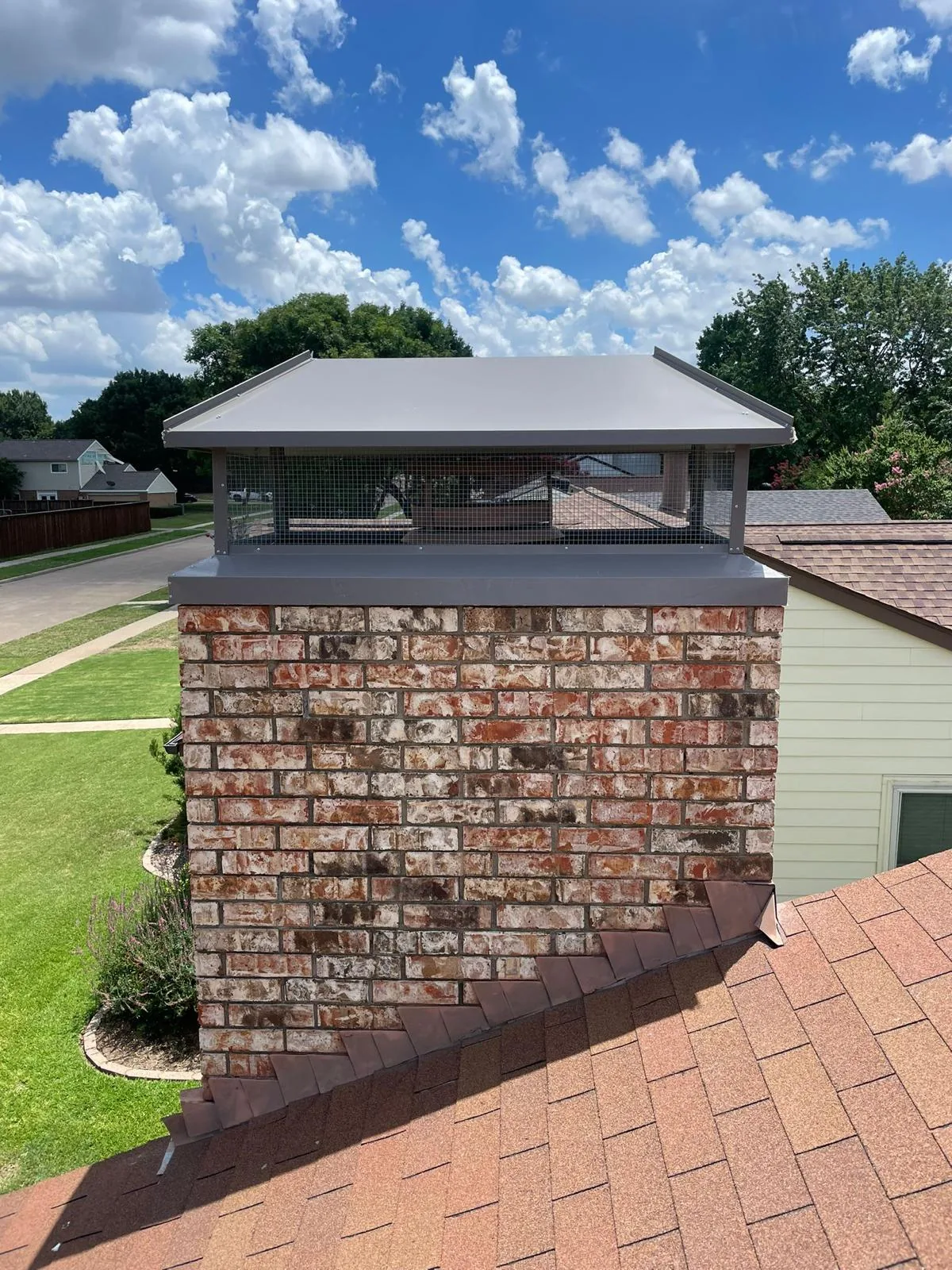
Chimney Cap Installation
A well-fitted cap keeps rain, birds, and embers where they belong.
Learn moreThe throat damper is the plate just above the firebox, and after enough seasons of heat and moisture the frame cracks, the plate warps, or the assembly rusts into a shape that no longer closes on anything. Replacement means removing the old frame from the masonry throat, fitting a new cast iron assembly to the opening, setting it in refractory mortar, and testing that it opens fully and closes flat. Understand what this fix is and isn't: a throat damper controls the flue while you're burning, but no metal-on-masonry damper seals airtight. If stopping year-round air loss is the goal, a top-sealing damper at the crown is the one that does it, and we'll say so rather than sell you the same job twice.
Prices shown are starting estimates and may change with the condition, access, and scope we find on site. Only a written quote from an on-site visit is a price we commit to.
Hinged plate at the throat — opens to vent, closes to stop drafts.
Drag the model to rotate — see exactly where this component lives in your chimney.
The damper is the valve between your home and the open sky, and a failed one is quietly costing you money every day of the year. When a damper won't close — rusted open, warped, or missing — your heated and cooled air escapes straight up the flue and outside air pours back down, an energy leak the size of an open window you never close. When it won't open, you can't safely light a fire. PCS Services treats the damper as the efficiency-and-safety component it is, not the afterthought it's usually neglected as, because a properly sealing damper is one of the most direct returns on a chimney service the homeowner actually feels on the utility bill.
We service both the damper you have and the one you may need. The traditional throat damper sits at the firebox throat; when its plate and frame corrode and warp, we replace the assembly so it seals and operates correctly. But the premium upgrade is a top-sealing damper: a spring-loaded, silicone-gasket damper mounted at the top of the flue that, when closed, seals the entire chimney like a stopper in a bottle — far tighter than a throat damper, and it keeps rain and animals out of the flue as a bonus, since it caps the top. We install the mounting plate or adapter that lets a top-sealing damper seat on a round or square flue, and we tension the spring or counterweight so it opens fully and snaps shut sealed. For a damper rusted shut, we free it with penetrating oil and mechanical work — often the first step in tracing a leak, since a stuck damper hides what's happening above it. We even fix the small nuisances: a top-damper flap that rattles in the wind gets re-tensioned or padded.
Installation detail is what separates a top-sealing damper that works for a decade from one that fails in a year. The mounting plate has to seat correctly to the flue — round or square, clay or metal — with the right adapter, or the gasket never makes a full seal. The cable that operates it from the firebox has to be routed and tensioned so the damper opens fully under load and snaps shut sealed when released, with the spring or counterweight balanced to do both reliably. Get the tension wrong and you have a damper that either won't open under a hot draft or won't close tight when cold — the two failures that make homeowners give up on top-sealing dampers entirely. We set these by feel and verify them, because a sealing component is only as good as the seal it actually achieves.
For gas-log conversions there's a code dimension we get right: the damper must be permanently clamped open or its plate removed so combustion gases can never be trapped, and we install the clamp to code rather than leaving it to chance. Whether the job is a corroded throat plate, a high-performance top-sealing upgrade, or freeing a seized damper, the same standard applies in every market on our national map — a damper that seals when it should, opens fully when you need it, and is set up correctly for your fuel. It's a small component with an outsized effect on comfort, efficiency, and safety, and getting it right is exactly the kind of detail a premium service is supposed to catch.
At PCS Services, a throat damper replacement is never guesswork. We scope every job from a graded, photographed inspection first — the NFPA 211 level the evidence calls for — so the work is matched to what your flue and masonry actually need, with the report to prove it. The documented inspection is the record the throat damper replacement is built on.
Chimney inspectionA throat damper replacement isn't a matter of opinion — it's held to published national standards. PCS builds every job to the named codes below and documents it, so the work is provably right for an inspector, an insurer, or a future buyer. These are the universal standards; your city's permit and inspection requirements are confirmed with the local authority before we pull the job.
A solid-fuel (wood-burning) fireplace must have a damper to control draft and seal the flue when not in use — a missing or seized-open damper is both an energy leak and a code deficiency.
For a vented gas log set the damper must be permanently clamped open (or its plate removed) so combustion products can never be trapped behind a closed damper — we install the clamp to code rather than leaving it to chance.
A top-mount sealing damper also serves as the flue's rain-and-animal closure, gasket-sealing the entire flue when closed in line with NFPA 211's intent to keep the venting path clear.
Codes cited are the established national standards (NFPA, UL, IRC) that govern this service. The adopted code edition, permit, and inspection requirements vary by city —PCS verifies them with your local authority having jurisdiction on every job.
Full Level 1 inspection identifies what needs attention.
Damper adjusted/replaced, gaskets refreshed, hardware tightened.
Smoke pencil verifies seal + draft. Glass doors checked for leaks.
Next-year reminder set so you never miss annual service.
We've worked on 0+ DFW homes over 15+ years. Every job — small sweep or full rebuild — runs the same way: certified technicians, written quotes, photo reports, warranty in writing.
Bundled with annual sweep — saves vs. separate trips
Top-sealing dampers available (90% better heat retention)
Glass-door gasket replacement included where applicable
All NFPA 211 + manufacturer guidelines followed
Family-owned, licensed and insured, working to NFPA 211. We're the team you call when you want it done right the first time — no rotating subcontractors, no upsell pressure, no surprises. Same techs, same trucks, same standard.
One full visit a year: a complete sweep, a top-to-bottom inspection, and a photo report you keep. Between visits you get the part you can't see — we track your schedule, send the reminders, and hold priority slots for plan members during the fall rush. If a repair ever comes up, you get a written quote first. There's no contract; the plan renews only if you want it to.
Before we leave your first visit, next year's window goes on our calendar. When it gets close, we reach out — text or call, your choice — and you pick the exact day. If you don't answer, we try again. That's the entire trick of the plan: your chimney gets maintained because someone whose job it is remembered, not because you happened to.
Honestly, no. If your chimney was built or fully relined in the past year, wait — it doesn't need a plan yet, and we'd rather tell you that than sell you one. Same if you have a gas-only fireplace you light twice a winter: an inspection every year or two covers you. Plans earn their keep for wood burners and busy households. On the fence? Ask. We'll tell you straight.
Late spring through summer is the smart window. The chimney's done for the season, everything winter did to it is visible, and appointments are easy to get. Most people call in October instead, when the calendar's slammed and the first cold front is a week away. Either works. But book in June and you'll never think about it in October.
Because the first cold snap is the chimney trade's alarm clock. From September through November, everyone who forgot their fireplace all year remembers it in the same two weeks, and every sweep in Dallas–Fort Worth is booked solid. It's the worst time to need an appointment, and it's the whole reason our plans schedule you automatically before the crowd shows up.
Last reviewed:
Other services in the Installation category.
Free written quote. Same-week scheduling. 24/7 emergency response when you need it.
Active leak, animal in flue, post-fire damage, or smoke event? Real humans on the line 7 AM to 12 AM every day — replies in under 2 minutes. Tech dispatch within 2 hours during business hours, subject to crew availability after-hours.
Emergency line