
Real Estate Chimney Inspection
Buying or selling? Know what the chimney's hiding before closing day.
Learn moreYou can't see most of your chimney, which is exactly why inspections exist. We examine the system from the firebox up through the flue to the crown and cap, checking for cracks, gaps, moisture, and blockages, and we photograph what we find so you're never just taking our word for it. You get a plain-English summary: what's fine, what to watch, what actually needs attention this year. For a fireplace that burns regularly, this is a once-a-year habit worth keeping — and the easiest one to hand off to a plan.
Prices shown are starting estimates and may change with the condition, access, and scope we find on site. Only a written quote from an on-site visit is a price we commit to.
Modern UL-listed metal liner — required for gas conversions and damaged flues.
Drag the model to rotate — see exactly where this component lives in your chimney.
A Level 1 inspection is the foundation of responsible chimney ownership, and PCS Services treats it with the rigor that word implies. Defined by NFPA 211 as the standard for a system in continuous service with no change in use, a Level 1 is a readily-accessible visual examination of the chimney exterior, the accessible interior, and the connection to the appliance. It confirms the structure is sound, the flue is clear of obstruction and combustible deposits, and the venting path is intact. It is the right inspection for an annual check on a system you've been using the same way, season after season — and it is the moment a trained eye catches the small problem before it becomes the expensive one.
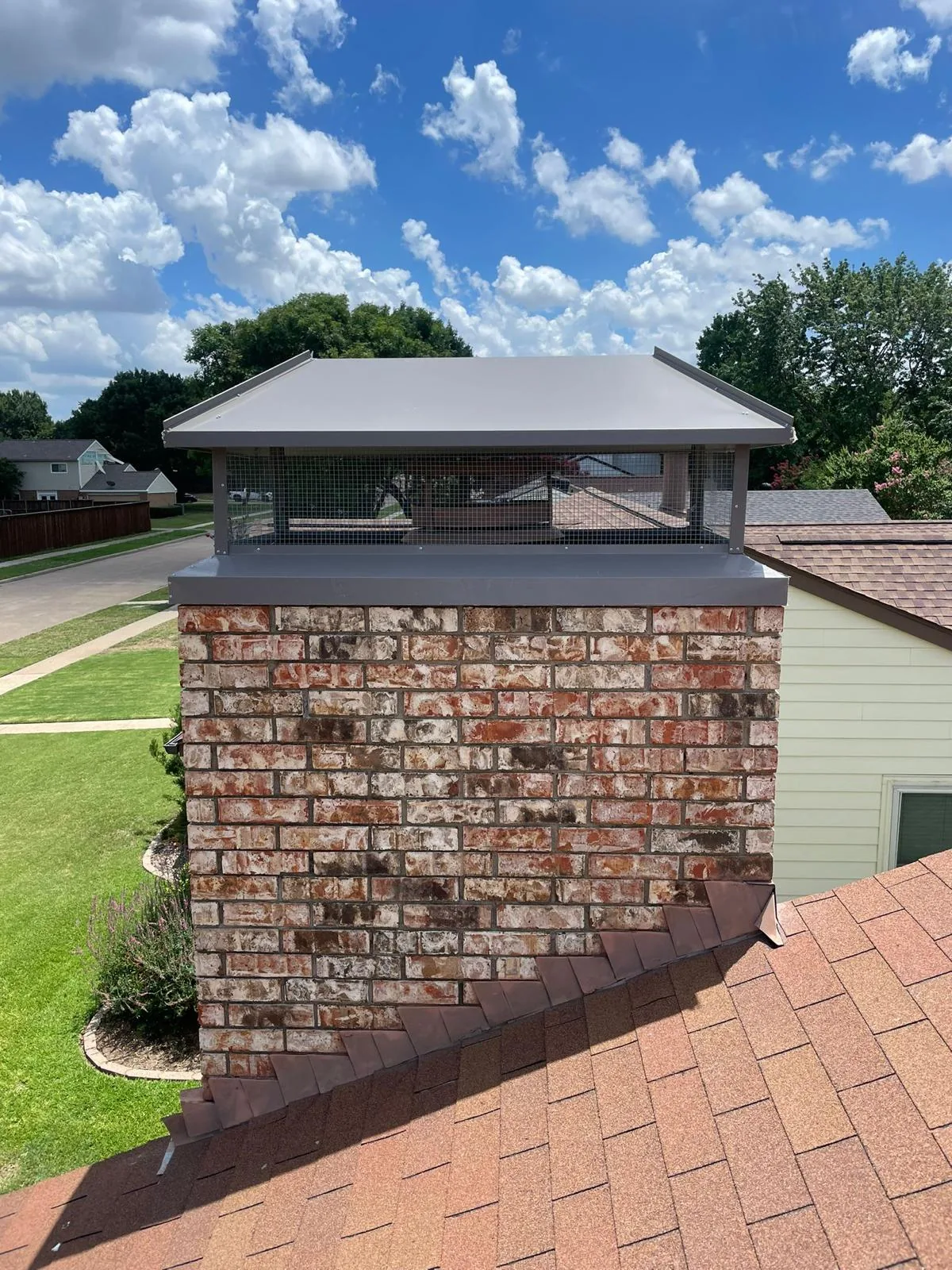
What separates a Level 1 from a checkbox walk-through is what the technician is actually looking for. We examine the crown for cracks and proper overhang, the cap and spark arrestor, the flashing seal at the roofline, the mortar joints and brick face for spalling, the visible flue tiles for cracking, the smoke chamber and shelf, and the damper operation. We read draft and verify clearances. Anything not readily accessible by definition triggers a recommendation to escalate to Level 2 — we never guess at a concealed condition, and we never sign off on what we couldn't see. That discipline is what makes the report trustworthy.
You receive a written report with photographs of every component, a plain-language condition rating, and a prioritized list of any findings — what is safe, what to watch, and what needs attention now. We separate genuine safety items from cosmetic ones so you can budget with confidence instead of fear. This is the same inspection protocol our technicians follow in every metro on our national map, which means a PCS report carries the same weight whether it accompanies a quiet annual tune-up or a real-estate file. Premium, to us, means the report is something you can hand to an insurer, a buyer, or a contractor and have it hold up.
The value of a Level 1 is largely in the catch — the hairline crown crack found before it lets in a winter of water, the early efflorescence that signals a moisture path forming, the damper beginning to seize, the cap whose spark screen has rusted thin. None of these is an emergency on the day we find it; every one of them becomes an expensive repair if it goes unseen for a season or two. A trained technician examining the same components every year builds a baseline for your specific chimney, so deterioration is spotted as a trend rather than a surprise. That continuity of inspection is itself a premium feature: the report isn't a one-time snapshot, it's a record that compounds in value the longer you keep your system under the same disciplined eye.
A chimney inspection isn't a matter of opinion — it's held to published national standards. PCS builds every job to the named codes below and documents it, so the work is provably right for an inspector, an insurer, or a future buyer. These are the universal standards; your city's permit and inspection requirements are confirmed with the local authority before we pull the job.
A readily-accessible visual exam of the chimney exterior, accessible interior, and the appliance connection — the right scope for a system in continuous service with no change in use. The annual standard.
Adds a video scope of the flue interior and inspection of accessible attic/crawlspace passages. Required after a property transfer, a fuel/appliance change, or a hazardous event such as a chimney fire, earthquake, or lightning strike.
Invasive examination — removal of components or masonry — performed only when a Level 1 or 2 inspection suggests a concealed hazard that can't be evaluated any other way.
Inspection verifies the flue terminates ≥3 ft above the roof penetration and ≥2 ft above anything within 10 ft — the height rule a smoking or back-drafting chimney often fails.
Codes cited are the established national standards (NFPA, UL, IRC) that govern this service. The adopted code edition, permit, and inspection requirements vary by city —PCS verifies them with your local authority having jurisdiction on every job.
1-hour arrival window, text 30 min before with tech's name + photo.
Full external + internal inspection with high-resolution photos.
Find code violations, structural defects, fire / water damage.
Written report with prioritized recommendations — no pressure.
We've worked on 0+ DFW homes over 15+ years. Every job — small sweep or full rebuild — runs the same way: certified technicians, written quotes, photo reports, warranty in writing.
All three levels available — Level 1, 2 (video scope), and 3
Insurance- and real-estate-grade written reports with photos
Our own trained inspectors — never subbed out
Free Level 1 inspection — no obligation to buy anything
Family-owned, licensed and insured, working to NFPA 211. We're the team you call when you want it done right the first time — no rotating subcontractors, no upsell pressure, no surprises. Same techs, same trucks, same standard.
One full visit a year: a complete sweep, a top-to-bottom inspection, and a photo report you keep. Between visits you get the part you can't see — we track your schedule, send the reminders, and hold priority slots for plan members during the fall rush. If a repair ever comes up, you get a written quote first. There's no contract; the plan renews only if you want it to.
Before we leave your first visit, next year's window goes on our calendar. When it gets close, we reach out — text or call, your choice — and you pick the exact day. If you don't answer, we try again. That's the entire trick of the plan: your chimney gets maintained because someone whose job it is remembered, not because you happened to.
Honestly, no. If your chimney was built or fully relined in the past year, wait — it doesn't need a plan yet, and we'd rather tell you that than sell you one. Same if you have a gas-only fireplace you light twice a winter: an inspection every year or two covers you. Plans earn their keep for wood burners and busy households. On the fence? Ask. We'll tell you straight.
Late spring through summer is the smart window. The chimney's done for the season, everything winter did to it is visible, and appointments are easy to get. Most people call in October instead, when the calendar's slammed and the first cold front is a week away. Either works. But book in June and you'll never think about it in October.
Because the first cold snap is the chimney trade's alarm clock. From September through November, everyone who forgot their fireplace all year remembers it in the same two weeks, and every sweep in Dallas–Fort Worth is booked solid. It's the worst time to need an appointment, and it's the whole reason our plans schedule you automatically before the crowd shows up.
Last reviewed:
Other services in the Inspection category.
Free written quote. Same-week scheduling. 24/7 emergency response when you need it.
Active leak, animal in flue, post-fire damage, or smoke event? Real humans on the line 7 AM to 12 AM every day — replies in under 2 minutes. Tech dispatch within 2 hours during business hours, subject to crew availability after-hours.
Emergency line